
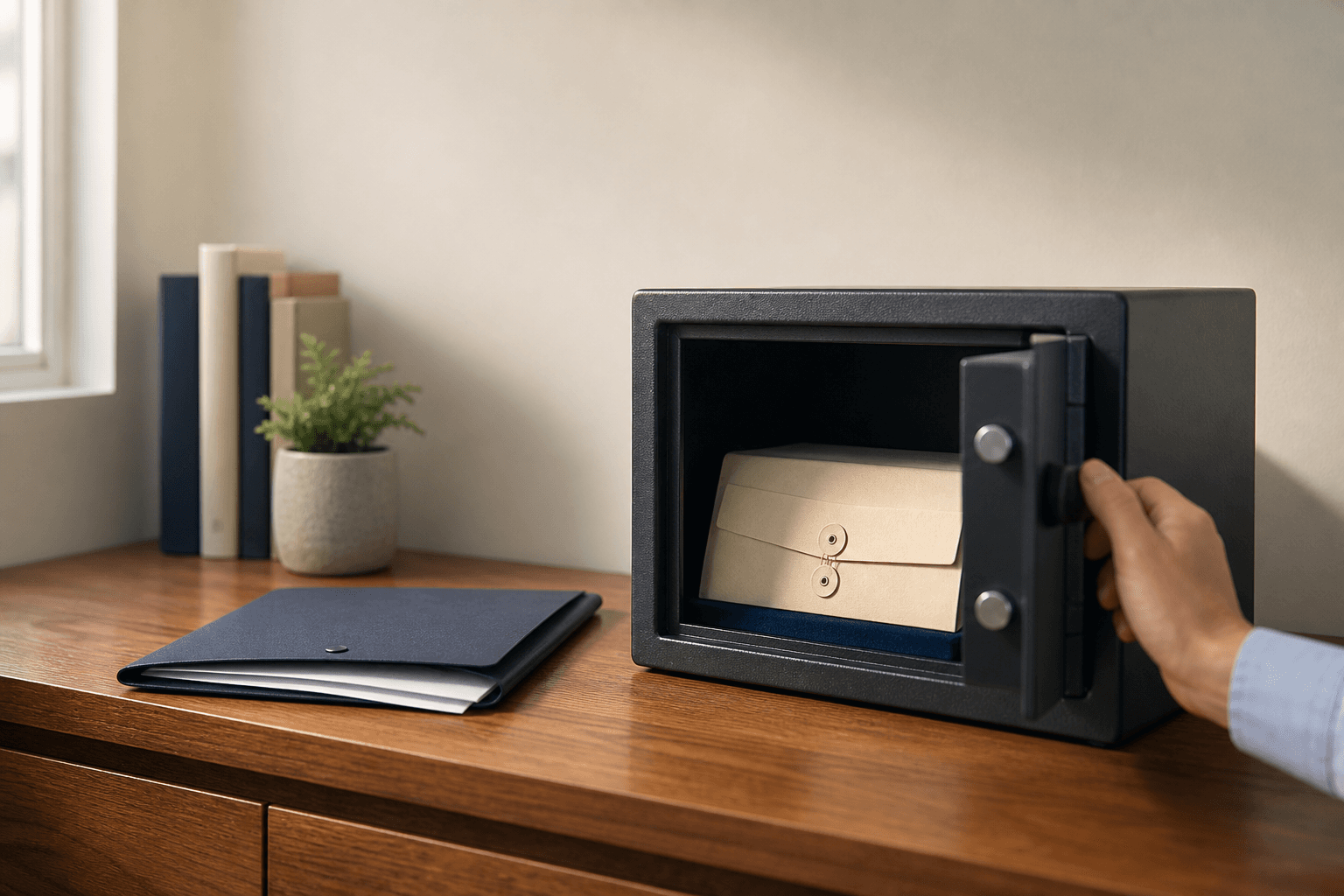
When preparing for a hurricane, extended travel, a medical emergency, or even an ordinary appointment, it may seem sensible to place all of your important legal documents in a folder and take them with you. Having the right information available is important—but that does not necessarily mean carrying the signed originals.
In most situations, the safer approach is to keep original estate planning documents in a secure, known location and carry copies only when they are needed for reference. An original can be difficult, costly, or sometimes impossible to replace after it is lost or damaged.
The Original Will Has Special Importance
A photocopy or scanned image is valuable for reference, but it is not always a substitute for the signed original. In Florida, the custodian of a will must deposit the original will with the appropriate clerk of court within 10 days after learning of the testator’s death. Florida law also makes clear that scanning or electronically storing a will does not eliminate the requirement to preserve the original.
If an original will cannot be located, the family may need to ask the probate court to establish and admit a lost or destroyed will. That process requires evidence of the will’s full and precise terms. Under Florida law, its contents generally must be proved by two disinterested witnesses—or, when a correct copy is available, by one disinterested witness. A missing original can therefore create delay, expense, uncertainty, and an opportunity for disagreement among interested parties.
There may be an additional concern when a will was last known to be in the testator’s possession but cannot be found after death. Florida courts may apply a presumption that the testator intentionally destroyed the will to revoke it. Although that presumption can sometimes be overcome, the resulting dispute is one that careful document storage may help avoid.
Travel Creates Avoidable Risks
Original documents can be misplaced in a hotel, vehicle, airport, hospital, evacuation shelter, or temporary residence. They may also be exposed to water, fire, theft, or accidental disposal. Even a spilled drink, torn page, removed staple, handwritten note, or other physical change can create questions that would not have arisen if the document had remained securely stored.
Estate planning documents also contain sensitive personal and family information. Carrying an entire original estate planning binder may unnecessarily expose addresses, names of beneficiaries and fiduciaries, signatures, financial information, and private health care instructions.
Copies Are Usually Better for an Emergency Kit
An emergency or travel folder can still be extremely useful. Depending on your circumstances, it might contain copies of:
- Your health care surrogate designation and living will;
- Your durable power of attorney;
- A brief list of medications, physicians, and emergency contacts;
- Insurance information;
- Identification and important account contact information; and
- Contact information for the attorney or office holding your original documents.
Secure electronic copies may also be helpful if they are stored in a password-protected location that a trusted person can access when necessary. Before relying on a copy, however, confirm whether the institution or person receiving the document will accept it. Requirements may differ depending on the document, the institution, and the circumstances.
Where Should the Originals Be Kept?
Original estate planning documents should be stored in a secure location protected from fire, water, theft, and accidental disposal. Depending on the arrangements offered, some clients choose to leave original documents with their estate planning attorney. Others use a suitable fire-resistant and water-resistant home safe.
Whatever location you choose, make sure the appropriate trusted people know where the documents are stored and how they can be obtained when needed. A document that is carefully protected but inaccessible to the personal representative, trustee, agent, or family may still cause avoidable difficulty. Safe-deposit boxes require particular planning because access can be restricted after incapacity or death.
If You Need a Document While Traveling
Before taking an original document out of storage, ask why the original is required. In many situations, a copy, certified copy, secure electronic copy, or attorney-confirmed alternative may be sufficient. If an original truly must be presented, plan for its secure transportation and prompt return to storage.
If you believe an original will or another original estate planning document has already been lost, damaged, or destroyed, contact an estate planning or probate attorney promptly. Do not assume that a photocopy will automatically have the same legal effect.
Protect the Plan You Worked to Create
Estate planning is not finished when the documents are signed. Thoughtful storage and controlled access are part of ensuring that the plan works when your family needs it. Keep the originals protected, make appropriate copies available, and tell the right people where the originals can be found.
If you are uncertain about how to store your original documents or what should be included in an emergency folder, our office can help you review your current arrangements.
This article is intended as a general overview and does not address every fact pattern or recent change in Florida law. Florida statutes are amended regularly; consult a Florida-licensed attorney for guidance specific to your matter.