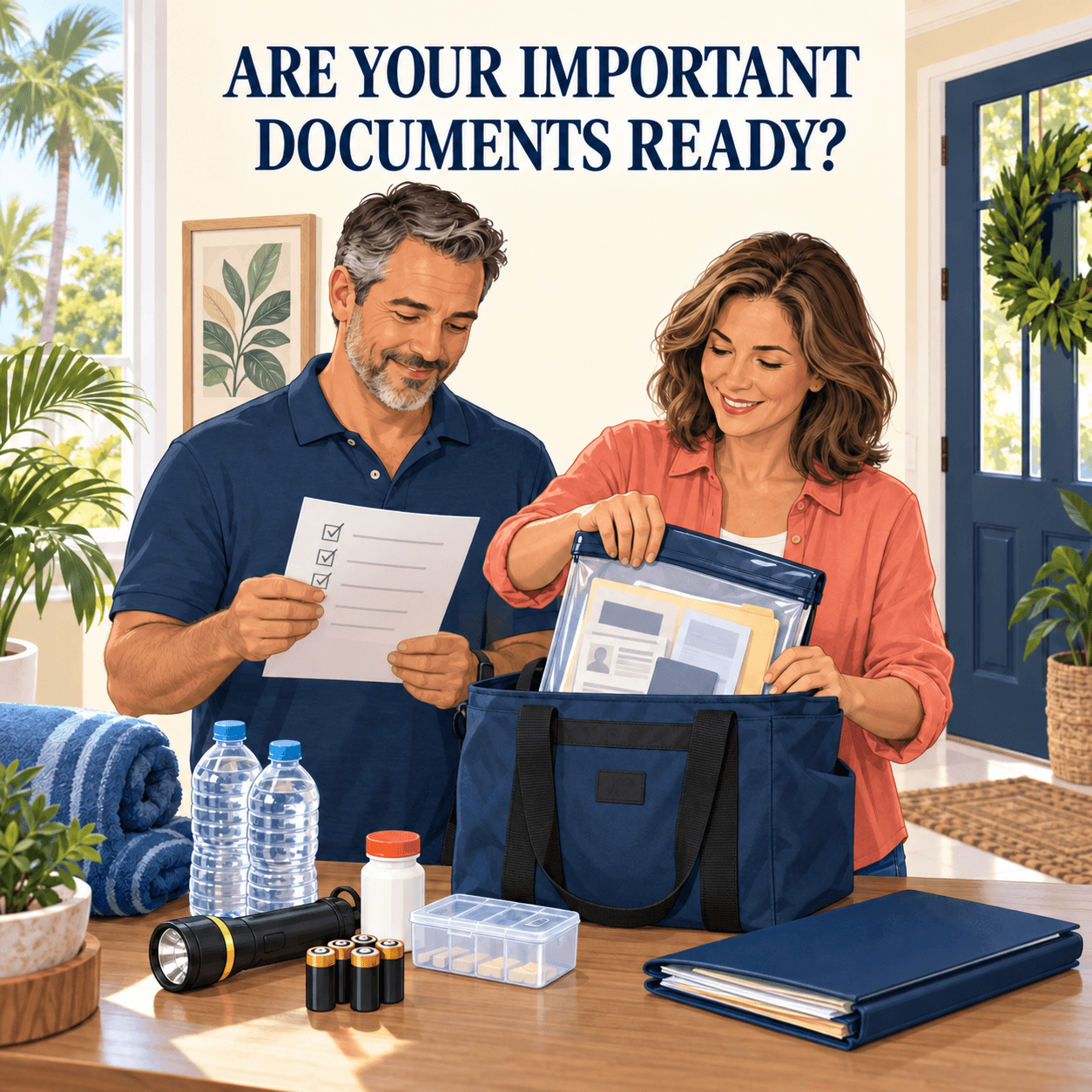
When preparing for a hurricane or another emergency, most people think about bottled water, batteries, flashlights, medications, and food.
Those supplies are important—but an emergency can also create an immediate need for identification, insurance information, contact numbers, and other documents that may be difficult to locate when time is limited.
September is National Preparedness Month, making it a good time to ask: If you had to leave home quickly, would your essential information be ready?
Think Beyond the Supply Kit
A practical emergency file may include copies of:
- Driver’s licenses or other identification
- Health, homeowners, automobile, and flood insurance information
- A current medication and allergy list
- Emergency contacts and physicians’ information
- Basic banking and account contact information
- Veterinary and vaccination information for pets
- Important estate-planning and health-care document information
The appropriate contents will be different for every household. The goal is not to place every original document into a bag. In fact, carrying irreplaceable originals unnecessarily may create another risk.
Instead, consider keeping originals in a secure location and maintaining protected copies that can be accessed when needed.
Make the Information Usable
Gathering information is only helpful if the right person knows that it exists.
Let a trusted family member know where the emergency file is located and how it can be accessed. If information is stored digitally, use appropriate password protection and make sure someone you trust knows how to obtain it during an emergency.
Review the file periodically. Insurance policies, medications, contact information, and decision-makers can change. An outdated emergency file may create confusion at exactly the wrong time.
Start Small
Preparing does not have to become an all-day project. Begin with identification, insurance information, medications, and emergency contacts. Add other information as time allows.
You can also use the process as a reminder to consider whether your existing estate-planning and health-care documents still reflect your circumstances and wishes.
An emergency kit helps your family respond to immediate physical needs. An organized document plan helps them find the information needed to make calls, confirm coverage, and take the next step.
This National Preparedness Month, make sure both are ready.
This article is intended as a general overview and does not address every fact pattern or recent change in Florida law. Florida statutes are amended regularly; consult a Florida-licensed attorney for guidance specific to your matter.