
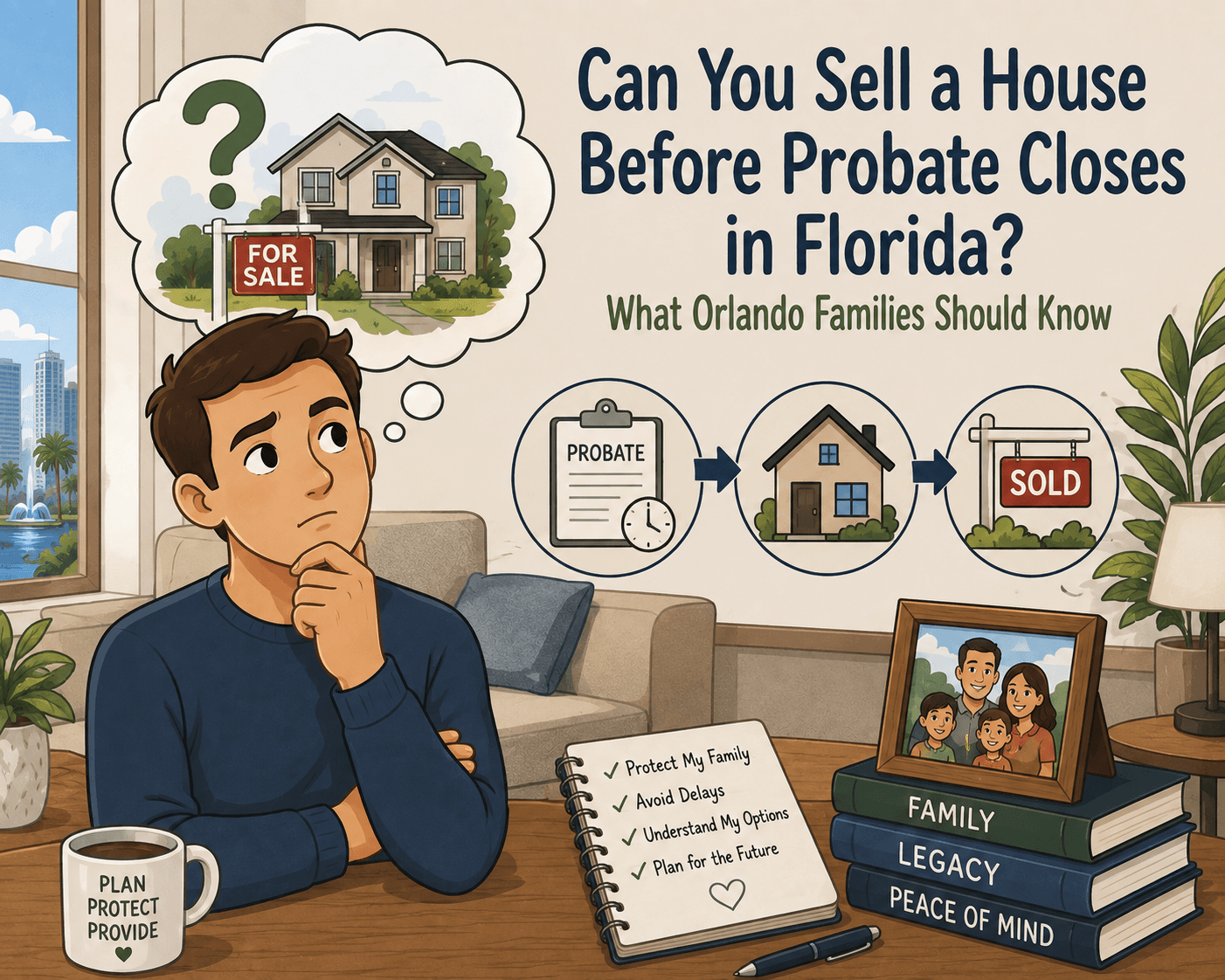
One of the most common questions we hear from Orlando families is some version of this: my father's estate is still in probate, but we have a buyer ready for his house right now, and we do not want to lose the deal. Do we really have to wait until the whole probate is finished before we can sell?
In many cases, the answer is no. You do not always have to wait for the estate to close to sell the home. Florida law gives a personal representative real authority over estate property, and a house can frequently be sold while the administration is still open. The key is understanding where that authority comes from, when a court has to bless the sale, and what happens to the money in the meantime.
Probate closing and selling are two different milestones
People often picture probate as a single event with a finish line, and assume nothing can happen with the assets until you cross it. In reality, an estate administration under Chapter 733 of the Florida Probate Code is a process with many steps. The estate is opened, a personal representative is appointed, creditors are notified, assets are gathered, debts and expenses are paid, and only at the end is the estate formally closed and the remaining property distributed.
Selling the house is one of the things that can happen in the middle of that process, not only at the end. In fact, selling real estate during administration is often exactly how the estate raises cash to pay debts, taxes, and expenses. So the question is not really whether you can sell before the estate closes. It is whether the personal representative has the authority to sell at this particular moment.
The personal representative's power to sell real property
That authority is addressed in Florida Statutes section 733.613, which deals with a personal representative's power to sell, mortgage, or lease real property of the estate. The statute draws an important distinction. When the decedent's will gives the personal representative a power of sale over real property, the PR can generally sell the home without first getting a separate order from the probate court. When the will does not contain that power, or there is no will at all, the personal representative typically needs court authorization, or the joinder of the people who have an interest in the property, before the sale.
This is why one of the first things we look at is the will itself. A modern, well-drafted Florida will often includes a broad power of sale precisely so the personal representative can handle real estate efficiently. If that language is there, selling the home mid-probate can be relatively smooth. If it is not, the path runs through a petition to the court, which is entirely doable but adds a step and some time.
When you will need court authorization or a will power
Think of it as two roads to the same destination. On the first road, the will grants a power of sale, and the personal representative signs the contract and the deed under the authority of the letters of administration. On the second road, there is no power of sale, so the personal representative asks the probate court for an order authorizing the sale, often with notice to interested persons, and once that order is entered the sale can proceed.
Either way, the buyer's title company will still want to see the probate file, the letters, and, where applicable, the court order. A practical mistake we see is a personal representative who signs a contract assuming the will gives them power to sell, when in fact the will is silent. Discovering that after you are under contract is stressful. Reading the will carefully at the outset, with counsel, tells you which road you are on before you commit to a buyer.
A relatable Central Florida scenario
Picture a hypothetical situation. Robert, a widower in Winter Park, passes away owning a home and naming his daughter Karen as personal representative in his will. The will includes a clear power of sale. A few weeks into the probate, a buyer offers a strong price for the house, and the family wants to move quickly because carrying costs, insurance, and an aging air conditioning system are eating into the estate.
Because Robert's will granted a power of sale, Karen, once appointed and holding her letters of administration, can generally negotiate and close the sale while the probate is still open, without stopping to get a separate court order for the sale itself. The proceeds go into the estate. Now imagine the same facts, but Robert died without a will. Karen would likely need the probate court's authorization, or the agreement of the heirs, before closing. Same family, same house, different path, all because of one paragraph in a will.
What happens to the sale proceeds
Selling the home before the estate closes does not mean the money lands in the heirs' bank accounts the day after closing. Sale proceeds generally belong to the estate. The personal representative holds and accounts for those funds, and they are used and distributed according to the administration. Debts, valid creditor claims, taxes, and expenses of administration are addressed first, and what remains is distributed to the beneficiaries when the estate is ready to close.
This matters because beneficiaries sometimes expect their share immediately after a sale. The more accurate picture is that the sale converts the house into cash that the estate then administers in the proper order. A personal representative who distributes proceeds too early, before creditor claims and expenses are resolved, can create real problems and personal exposure. Patience here protects everyone, including the personal representative.
Timing, carrying costs, and the broker's reality
From a real estate standpoint, there is often a strong case for selling sooner rather than waiting for the estate to wrap up. A vacant home in Central Florida costs money every month in insurance, utilities, lawn care, and the slow march of deferred maintenance. Selling during administration can stop that bleed and turn an illiquid asset into cash the estate can manage.
Because our firm is grounded in both probate law and real estate, we tend to coordinate the legal authority and the market timing together. We confirm the personal representative's power to sell, line up any court authorization that is needed, and work alongside your Realtor and the title company so that when the buyer is ready, the seller is legally ready too. The goal is a closing that holds, not one that collapses because authority was never properly established.
How our firm helps
When an Orlando family wants to sell a home while probate is still open, we figure out quickly whether the will grants a power of sale, secure any court authorization that is required, and make sure the personal representative can sign with confidence. We coordinate with agents, title companies, and lenders so the sale closes cleanly and the proceeds are handled the way the law requires.
We encourage clients to bring in what they found online so we can explain what is right, what is wrong, and what the tradeoffs are. A conversation with a lawyer is better than guessing based on internet content, online forms, or AI-generated answers.
If you need to sell estate property before probate closes, call our office at (407) 843-0430 or visit orlandoprobatelawyer.com to schedule a consultation. We have been helping Orlando families since 1928 — and we would be glad to help yours.
This article is intended as a general overview and does not address every fact pattern or recent change in Florida law. Florida statutes are amended regularly; consult a Florida-licensed attorney for guidance specific to your matter.