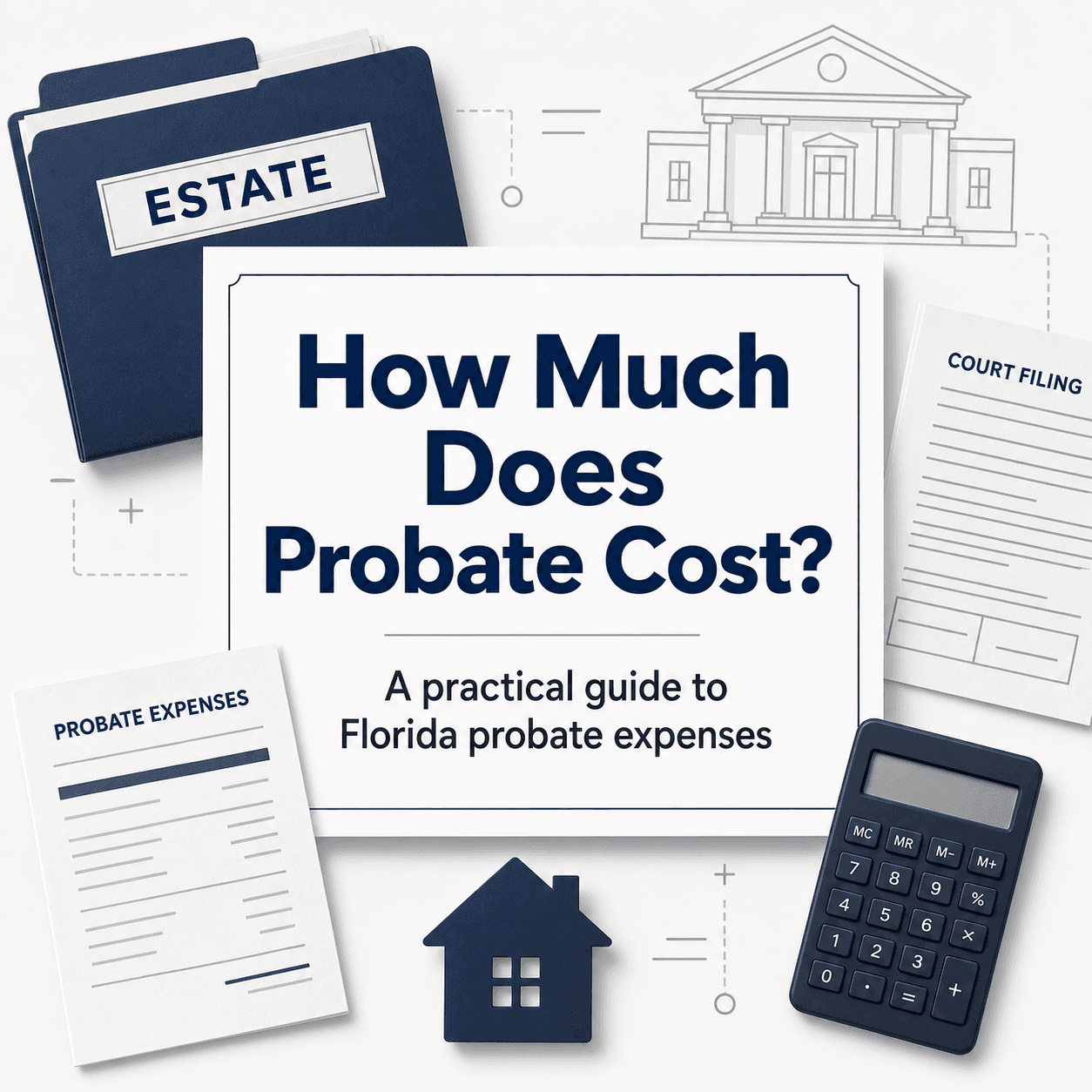
It is one of the first questions an Orlando family asks after a death, and it is a fair one. Before anyone agrees to open an estate, they want to know what it will cost. The honest answer is that probate cost in Orange County, Florida is not a single number, because it is built from several separate pieces that depend on the size of the estate and how complicated it turns out to be.
This post breaks those pieces apart so you can see what you are actually paying for. None of this is a quote, and every estate is different, but understanding the components helps you ask better questions and avoid the sticker shock that comes from treating probate as one mysterious fee.
Court filing fees come first
Every probate case in Orange County begins with a filing fee paid to the Clerk of the Circuit Court, Probate Division. The amount depends on the type of administration, with formal administration costing more to open than summary administration. These court costs are set by statute and the clerk's fee schedule, and they are adjusted periodically, so confirm the current figure with counsel or the Orange County Clerk before relying on a number you found online.
Filing fees are usually the smallest part of the total. They get the case in the door, but they are not what most families are really asking about when they ask what probate costs.
Attorney fees and the statutory guidance
For most estates, attorney fees are the largest line item. Florida law addresses this directly. Under section 733.6171 of the Florida Statutes, the attorney for the personal representative is entitled to reasonable compensation, and the statute provides a schedule of presumptively reasonable fees based on the compensable value of the estate. In plain terms, the statute offers a baseline tied to estate size that courts treat as reasonable absent a different agreement.
It is important to understand what that schedule is and is not. It is a guide to what is presumed reasonable, not a mandatory price. Attorneys and personal representatives can agree to a different reasonable fee arrangement, and extraordinary services, such as handling a will contest or selling real estate, may be compensated separately. Because the statutory figures are tied to dollar thresholds that are adjusted periodically, confirm the current figure with counsel rather than assuming an old number still applies.
Personal representative compensation
The person serving as personal representative is also entitled to be paid for the work, and Florida addresses this too. Section 733.617 of the Florida Statutes provides a schedule of reasonable compensation for the personal representative based on the value of the estate, along with provisions for extraordinary services.
In many Central Florida families, the personal representative is a close relative who chooses to waive this compensation, especially when they are also a beneficiary. But the right exists, and it is part of the overall cost picture. When a personal representative does take a fee, it is governed by the statute, not by guesswork.
The other costs people forget
Beyond fees, an estate pays for the actual work of administration. There is the cost of publishing the notice to creditors in a local newspaper, which Orange County estates typically handle through an Orlando-area legal publication. There may be a bond if the court requires the personal representative to post one, which is more common when the will does not waive bond or the personal representative lives out of state.
Then come the case-specific expenses: appraisals of real estate or unusual assets, accounting fees, certified copies, postage for formal notices, and recording fees if property has to be transferred. None of these is enormous on its own, but together they are a real part of the total and they vary widely from one estate to the next.
Formal versus summary administration
The single biggest driver of cost is which type of administration the estate needs. Formal administration is the full process, with a personal representative, Letters of Administration, a creditor period, and ongoing court supervision. It costs more because it involves more work over more months.
Summary administration is a streamlined alternative available for smaller estates and for estates where the person has been dead long enough to satisfy the statute. Because summary administration skips the appointment of a personal representative and much of the ongoing supervision, it is generally less expensive. The dollar threshold that determines whether an estate qualifies for summary administration is set by statute and has been adjusted by the Legislature, so do not rely on a specific figure you read somewhere. Confirm the current threshold with counsel before assuming an estate qualifies.
A Baldwin Park example
Picture a hypothetical widower, Tom, who lived in Baldwin Park here in Orlando. Tom dies with a home, two bank accounts, and a modest brokerage account, all individually owned, plus a valid will. The estate is large enough to require formal administration.
Tom's estate will pay a court filing fee to open the case, attorney fees guided by section 733.6171 based on the estate's compensable value, the cost of publishing notice to creditors in an Orlando legal newspaper, and certified copies of Letters of Administration to present to the bank and brokerage. His daughter, serving as personal representative, is entitled to compensation under section 733.617 but decides to waive it because she is also the primary beneficiary. The total reflects all of those pieces, not a single flat number. This is hypothetical, but it shows how the parts add up.
What drives the total up or down
Cost rises when an estate is contested, when real estate has to be sold, when creditors file claims that must be litigated, or when assets are scattered and hard to value. Cost falls when the estate is simple, the family agrees, the will is clear, and everything is well documented.
The biggest cost savings usually come from planning done before death. An estate that avoids probate through a properly funded trust or correct beneficiary designations spends far less than one that goes through full administration. The cheapest probate is often the one that was never needed.
How our firm helps
At Yergey & Yergey, P.A., we walk Orange County families through the real cost of probate at the very first meeting. We explain how the statutory fee guidance under sections 733.6171 and 733.617 applies to your specific estate, we identify which type of administration fits, and we give you a clear picture of court costs, publication, and the other expenses before you commit to anything.
We encourage clients to bring in what they found online so we can explain what is right, what is wrong, and what the tradeoffs are. A conversation with a lawyer is better than guessing based on internet content, online forms, or AI-generated answers.
If you want a straight answer about what probate will cost for your family's estate, call our office at (407) 843-0430 or visit orlandoprobatelawyer.com to schedule a consultation. We have been helping Orlando families since 1928 — and we would be glad to help yours.
Frequently asked questions
Is there one flat fee for probate in Orange County?
No. Probate cost is built from several pieces: court filing fees, attorney fees, personal representative compensation if taken, publication costs, possible bond, and case-specific expenses like appraisals. The total depends on the estate's size and complexity.
How are attorney fees for probate set in Florida?
Section 733.6171 of the Florida Statutes provides a schedule of presumptively reasonable attorney fees based on the compensable value of the estate, with additional compensation possible for extraordinary services. It is a guide, not a mandatory price, and the underlying thresholds are adjusted periodically.
Does the personal representative get paid?
They may. Section 733.617 sets out reasonable compensation for the personal representative based on estate value. Many family members who serve, especially those who are also beneficiaries, choose to waive it, but the right exists.
Is summary administration cheaper than formal administration?
Generally yes. Summary administration skips the appointment of a personal representative and much of the ongoing supervision, so it tends to cost less. Whether an estate qualifies depends on a statutory dollar threshold and timing rules, which are adjusted periodically, so confirm the current figure with counsel.
What is the biggest factor in the final cost?
Complexity. A clear, uncontested estate with organized assets costs far less than one involving disputes, litigation, or hard-to-value property. Planning before death that avoids probate entirely usually saves the most.
This article is intended as a general overview and does not address every fact pattern or recent change in Florida law. Florida statutes are amended regularly; consult a Florida-licensed attorney for guidance specific to your matter.