What Is Probate Litigation, Really?
Probate in Florida is supposed to be an orderly process: identify the decedent’s assets, pay valid debts, and distribute what is left under the will or, if there is no will, under the Florida Probate Code. When everyone agrees, it is largely administrative.
Probate litigation is what happens when people stop agreeing. It refers to lawsuits and contested proceedings that arise inside the probate case – often over the validity of a will or trust, how an estate is being administered, or who is entitled to what. In other words, it is ordinary Florida probate, with subpoenas.
Common examples include:
- Will or trust contests (lack of capacity, undue influence, fraud, mistake)
- Challenges to a personal representative or trustee for breach of fiduciary duty or removal
- Fights over who qualifies as an “interested person” and has standing to object
- Elective share and spousal rights disputes, pretermitted heirs, and creditor claims
If it is a contested issue tied to an estate or incapacity and it lands in front of a probate judge, it usually falls under the umbrella of probate litigation.
Who Can Actually Fight: “Interested Persons” and Standing
Not everyone who dislikes the will gets a day in court. Florida limits who can contest estate matters to “interested persons” – those who may reasonably be expected to be affected by the outcome of the proceeding.
Under section 731.201, that typically includes:
- The personal representative
- Current and remainder beneficiaries
- Heirs at law if there were no will
- Sometimes creditors or others with a direct economic stake
Being an “interested person” is usually a threshold issue. If you lack standing, your petition goes nowhere, no matter how offended you are by the decedent’s choices.
How Probate Litigation Starts
While the probate estate itself is opened by petition, the litigation side begins when someone files a contested pleading – a will contest, objection, petition for revocation of probate, petition to remove a personal representative, complaint for breach of fiduciary duty, and so on.
From there, the familiar civil‑litigation machinery starts to spin:
- Petition or complaint filed in the probate division alleging a specific problem: invalid will, mismanagement, improper distribution, elective share violation, etc.
- Service of process on the respondents, giving the court personal jurisdiction and real notice of the dispute.
- Responsive pleadings – answers, affirmative defenses, sometimes counter‑petitions – teeing up the actual issues to be decided.
At that point, what started as “routine” probate begins to look suspiciously like any other lawsuit.
The Discovery Phase: Where the Facts (Sometimes) Come Out
Once the pleadings close, the parties enter discovery, the stage where everyone formally demands to see the other side’s cards.
In Florida probate litigation, discovery typically includes:
- Interrogatories and requests for production (financial records, medical records, emails, drafts of estate documents)
- Requests for admission to narrow which facts are actually in dispute
- Depositions of the drafting attorney, witnesses, caregivers, family members, and sometimes the fiduciary’s accountant or investment advisor
In undue influence and capacity cases, discovery often focuses on:
- Who drove the decedent to the lawyer’s office
- Who was present for meetings and document signings
- Who controlled access to the decedent near the end of life
- Who benefited from last‑minute changes
The point is to build the evidentiary record that will eventually be put in front of the judge – or used to corner the other side into a sensible settlement.
Motions, Mediation, and Why Most Cases Never Reach Trial
Probate judges, like all trial judges, prefer not to hold unnecessary trials. Before anyone picks a jury or calls a witness, you can expect:
- Dispositive motions – motions to dismiss, for judgment on the pleadings, or for summary judgment, asking the court to rule as a matter of law on some or all of the claims.
- Evidentiary motions – to limit or exclude certain witnesses, medical records, or expert opinions.
- Court‑ordered mediation – Florida courts routinely send probate disputes to mediation in an effort to resolve them short of trial.
Mediation in the probate context can be particularly useful because the real fight is often about family expectations, not just the black‑letter law. A probate litigator who understands both the statute and the family system is markedly more effective in that room than someone who simply read the Probate Code last week.
Trial: What Happens When Settlement Fails
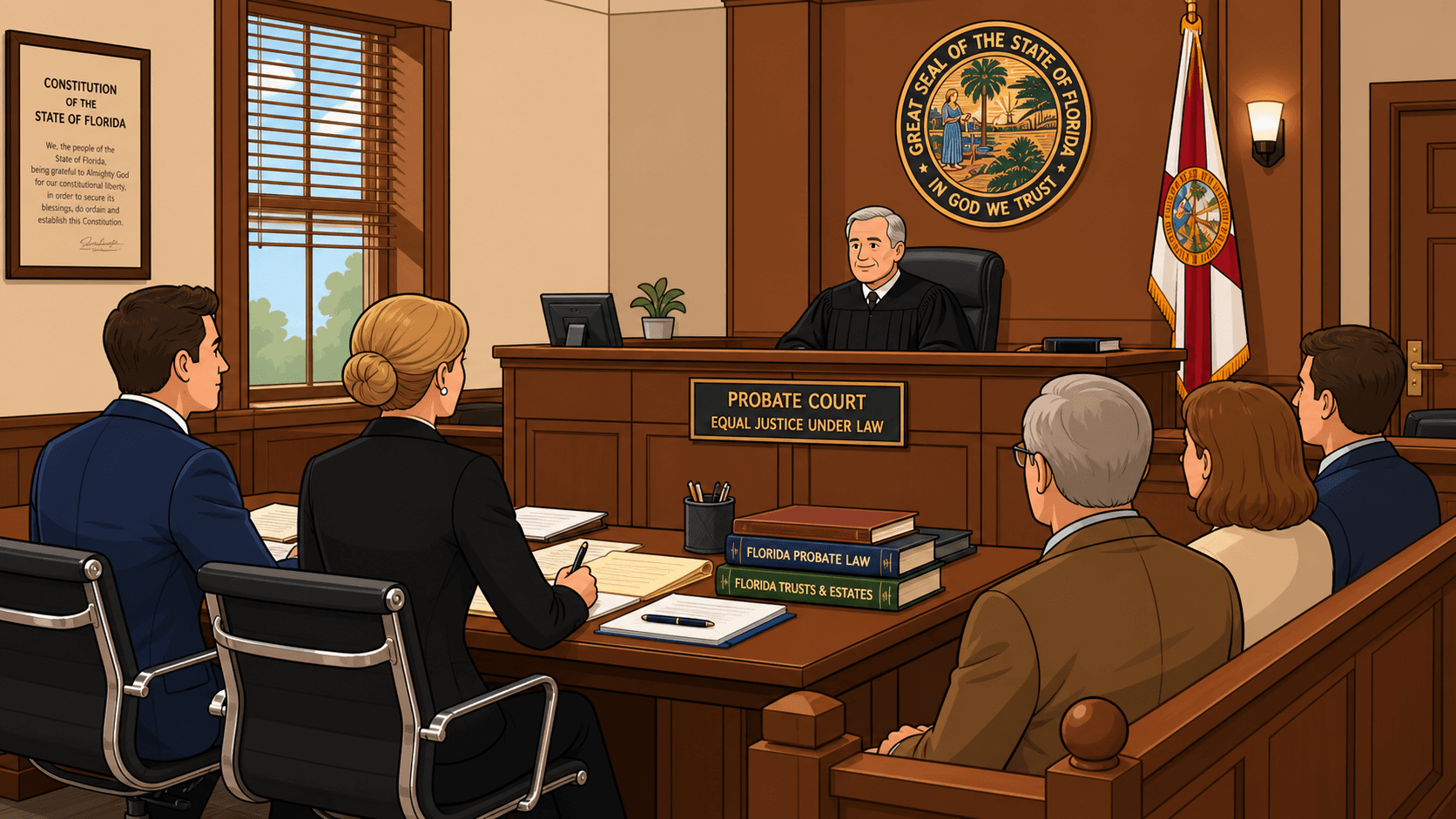
When a probate case does go the distance, trial in the probate division looks familiar, but with subject matter that is very specific:
- Bench vs. jury: Many probate trials are bench trials decided by the judge, though certain issues (e.g., some will contests sounding in fraud or undue influence) may be tried to a jury, depending on the claims and procedural posture.
- Evidence: Medical records, capacity evaluations, testimony from treating physicians and drafting attorneys, lay witnesses describing the decedent’s behavior, and financial records tracking asset movement.
- Legal standards: Burdens of proof for undue influence, lack of testamentary capacity, and fiduciary breach are drawn from Florida case law and statutes such as section 733.107 and related authority.
The judge ultimately issues findings that may uphold or invalidate a will or trust, remove or surcharge a fiduciary, re‑allocate distributions, or grant other relief authorized by the Florida Probate Code.
Common Triggers for Probate Litigation in Florida
Patterns repeat. The most frequent spark for probate litigation tends to be:
- Allegations of undue influence or lack of capacity in late‑in‑life wills or trust amendments
- Blended families where children from prior relationships feel sidelined by a surviving spouse or step‑siblings
- Disputes over the actions of the personal representative or trustee – failure to account, self‑dealing, or perceived favoritism
- Conflicts over elective share, exempt property, or omitted (pretermitted) spouses or children
In short, probate litigation usually reflects issues that were either not addressed in the planning stage or have been badly mishandled in administration.
Why Experienced Probate Litigators Matter
Probate litigation is its own ecosystem. It sits at the intersection of:
- The Florida Probate Code and Trust Code
- Civil procedure, evidence, and trial practice
- The very human realities of grief, blended families, and wealth transfer
An effective probate litigator understands not only the statutes and deadlines, but also how these cases actually play out in front of a probate judge – from the first petition to post‑trial enforcement.
This article is intended as a general overview and does not address every fact pattern or recent change in Florida law. Florida statutes are amended regularly; consult a Florida-licensed attorney for guidance specific to your matter.